Students Save Life of Law Professor Who Suffered Heart Attack in Class

November 10, 2026
In the legal profession, “reframing” means to take something bad and turn it into something good. That’s why UNT Dallas College of Law professor Michael Maslanka wants to share his recent near-death experience.
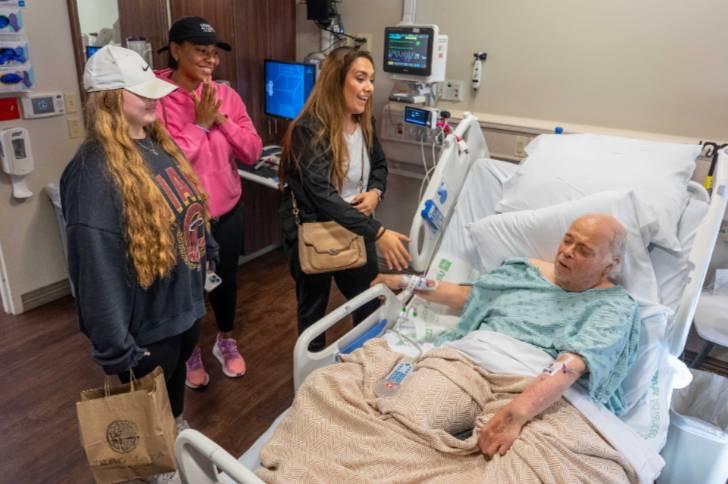
“I just saw blackness,” Maslanka, 73, explained while lying in bed at Baylor Scott & White Heart Hospital in Dallas. He recalled what the emergency room doctor told him. “She said, ‘We have to shock you.’ And the next thing I heard was ‘Clear!’,” Maslanka said.
Maslanka’s life was saved not only by that electrical jolt but by quick-thinking students, including Matthew Melton, a former Navy SEAL, who sprang into action when Maslanka suffered a medical crisis during an evening class on Oct. 8, 2026. “He waited for the right time to act,” the professor said, clarifying that Melton didn’t begin CPR until he stopped breathing and had no pulse. “We teach students to think sequentially. If this, then that,” said Maslanka. “He showed restraint first—or he could have made it worse.”
Melton’s recollection is just as chilling. “Students were freaking out. Action needed to be taken,” he said. “Once he stopped breathing, he lost color, we put him on the floor and started CPR – three rounds.”
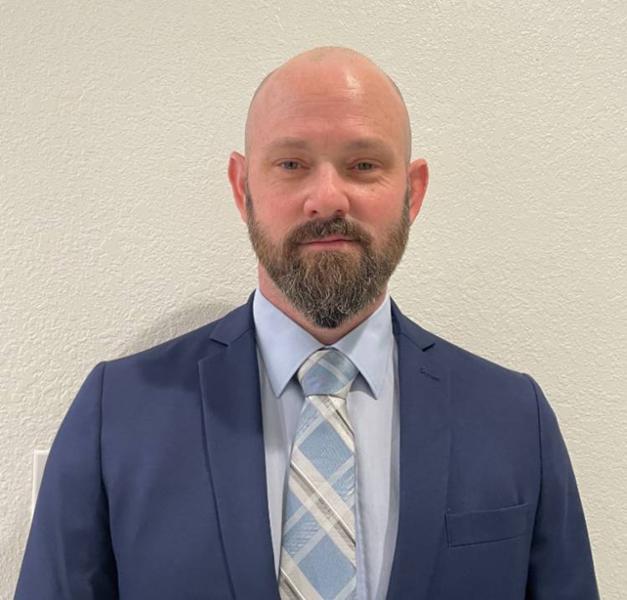
But the job was far from finished. “He came back,” Melton explained, “with labored breathing. Then he went out (of consciousness) again. “I was going from chest compressions to forced air (in Maslanka’s mouth). When I did the first compression, I could hear his ribs break.”
Melton was quick to credit fellow law students Anwar Hannon and Jeff Baza, both of whom asked to assist. A fourth student, Daniella Sanchez, could sense something was wrong early on. She immediately called 911, then rushed to the front of the classroom, grabbed Maslanka’s hand and started praying.
Once Maslanka regained consciousness again, he shouted loudly, confused about what was happening. “He thought his life was about to be extinguished,” said Melton. “He didn’t know where he was.” Soon after, Dallas Fire Rescue arrived, stabilized Maslanka, loaded him on a gurney, and rushed him to the hospital.
By that time, most students had been moved to another classroom, where they started a prayer circle. “I hadn’t heard so many prayers in a long time,” Melton said.
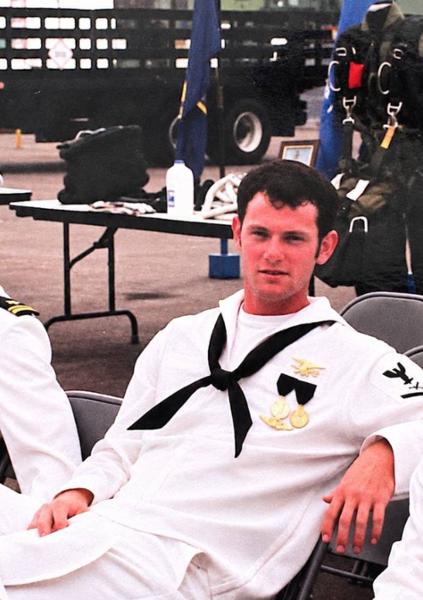
The 45-year-old cybersecurity IT professional joined the Navy with the specific goal of becoming a SEAL. “A Naval special wartime SEAL,” Melton clarified. He trained with the best – the 18 Delta medics and field surgeons who save lives on the battlefield. Melton deployed twice: Bahrain in 2001 and Iraq in 2005. His disciplined background taught him to “always be able and ready to pivot and always be open to what might happen.”
Prophetically, Maslanka talked about Navy SEALS in a 2014 video about humility in the legal profession for Texas Bar TV. He advised attorneys to "think like a SEAL" and encouraged them to "train for what can go wrong." It's enough to make some wonder if Maslanka and Melton have a clairvoyant connection.
Melton takes night classes so he can continue his day job. He’s known as a 3E, in the third year of a four year program. “Law school has already given me the ability to understand where organizational structures are broken so I can help society” Menton said, explaining one of the reasons he sought a legal education.
Melton learned CPR in high school and has taught classes on it. “I've watched the videos a thousand times,” he recalled. “If you don’t know it, learn it. It’s not that hard.”
It’s a life-saving lesson that Maslanka also wants others to learn. He’s emphatic about it, just as his students would expect. Maslanka believes the more people who know CPR, the more heart attack victims will survive like he did. “This is a public service. It’s about education. It’s our mission,” the professor said.
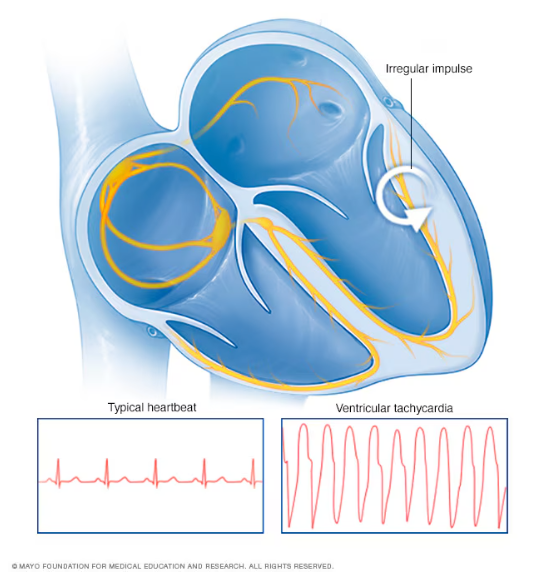
Maslanka suffered a “V-tach,” also known as a “VT,” – short for ventricular tachardia – that occurs when the upper and lower chambers of the heart get out of sync. It’s a type of irregular heartbeat, called an arrhythmia. It starts in the lower chambers, called the ventricles. According to the Mayo Clinic, a healthy heart typically beats about 60 to 100 times a minute at rest. With VT, the heart beats faster, usually 100 or more beats a minute.
“You were gone. We were grieving your passing,” said Sanchez, who stopped by the hospital with two classmates to visit their beloved professor exactly one week after the incident. “Everyone was balling.”
Sanchez lost her father to a heart attack, as did another classmate who witnessed the stunning incident. “It was oddly orchestrated by God,” Sanchez said, meaning the medical emergency happened when others were nearby to help. Everyone agreed that a few minutes earlier in his office or later at home after class and Maslanka would likely have died.
“We have a special relationship with you, professor” said student Hannah Roth. Classmate Alysia Davis agreed. “I am so grateful to know you – professionally and personally,” Davis said. “You’ve been so instrumental in our lives. I’ll take what I learned from you forever.”
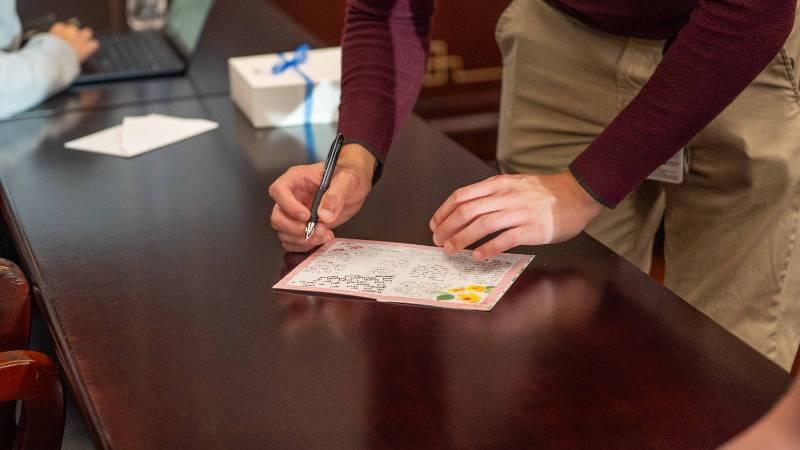
In addition to all of the legal knowledge, skills and instincts they have developed over the last three years, Maslanka hopes they will now learn CPR. “With my experience, people can see the importance of CPR,” he said. “Our hearts run on electricity.”
Always curious and always a researcher, Maslanka looked up the statistics. “A thousand people a day die of V-tach. 300,000 a year,” he exclaimed. Maslanka is resolute. He wants his story of survival to motive others to take CPR training and become certified potential live-savers.
The American Red Cross makes it easy. The organization’s online training guide offers courses, instructional videos and a search tool to find classes near you.
During the hospital room chat, Maslanka remembered a drawing on the classroom blackboard made by a student to illustrate one of his teaching points. It was a fork in a road. “I had one that night,” said Maslanka with a cold stone sober look on his face. “Life or death.” It was an emotional, nearly tearful moment.
He also remembered a more distant memory from literature studies long ago:
"The vulnerability of precious things is beautiful because vulnerability is a mark of existence."
The famous line from French philosopher Simone Weil stuck with Maslanka. “I’ve been thinking a lot about that quote lately,” he said wryly.
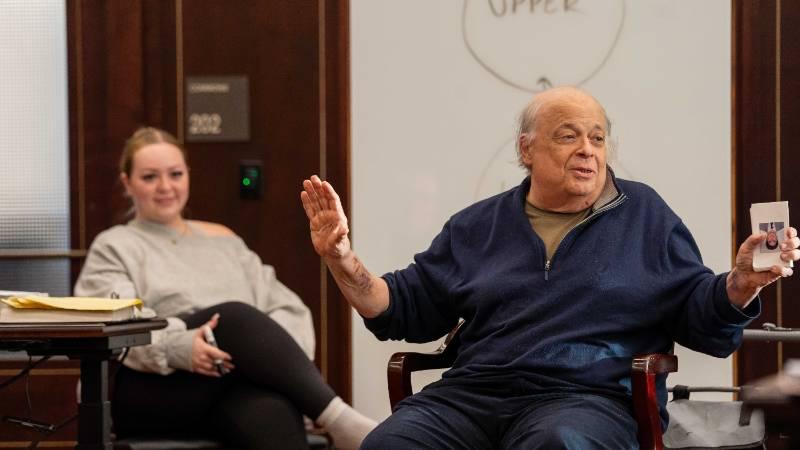
After two days in the ICU and a few more in a regular room, Maslanka left the hospital and was back in class soon after, picking up just where he left off. He’s even written an article about his experience for Texas Lawyer that will be published soon titled “Four Life Hacks That Dying (Twice) Taught Me.”
The Thursday evening course Maslanka was teaching at the time of his heart attack is called “Remedies.” In this case, it was a remedy driven not by law, but by a will to live – and the action of students who refused to let their beloved professor go.
CPR Resources:
Categories: