College of Law Advocacy Team Members Share Achievements as Future Attorneys

August 19, 2026
Merriam-Webster Dictionary defines Advocacy as "the action of advocating, pleading for, or supporting a cause or proposal." The word was more specifically and emotionally described recently by four future attorneys whose careers have been shaped by the UNT Dallas College of Law.
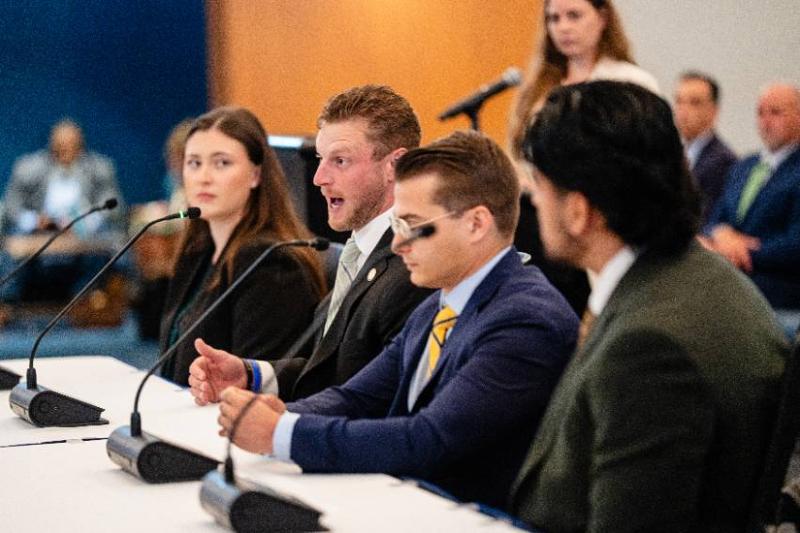
Combining legal expertise with a service mindset, they explained how the school advanced their educational and professional goals—and their commitment to community.
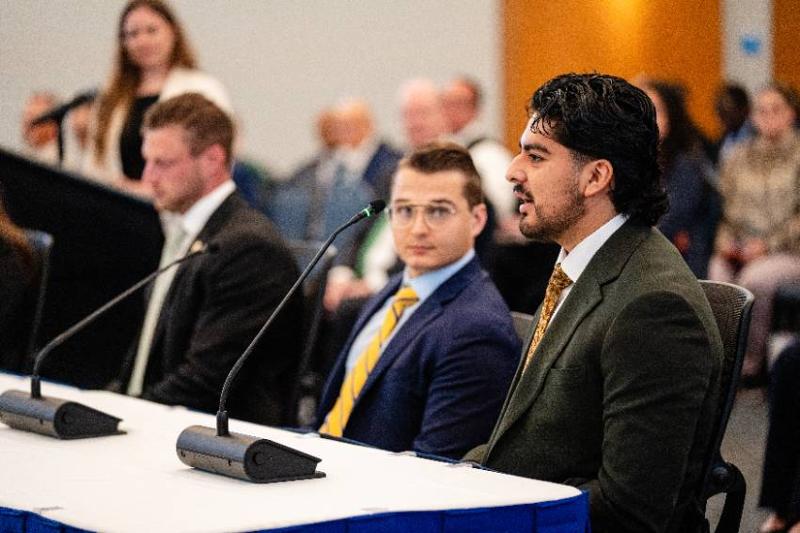
The two 2026 graduates and two current third year students spoke during the “Spotlight on Students” portion of the UNT System Board of Regents meeting on Aug. 13, 2026, at the UNT Dallas main campus. “You guys are great examples, you are poster kids for us,” declared Board of Regents President Carlos Munguia.

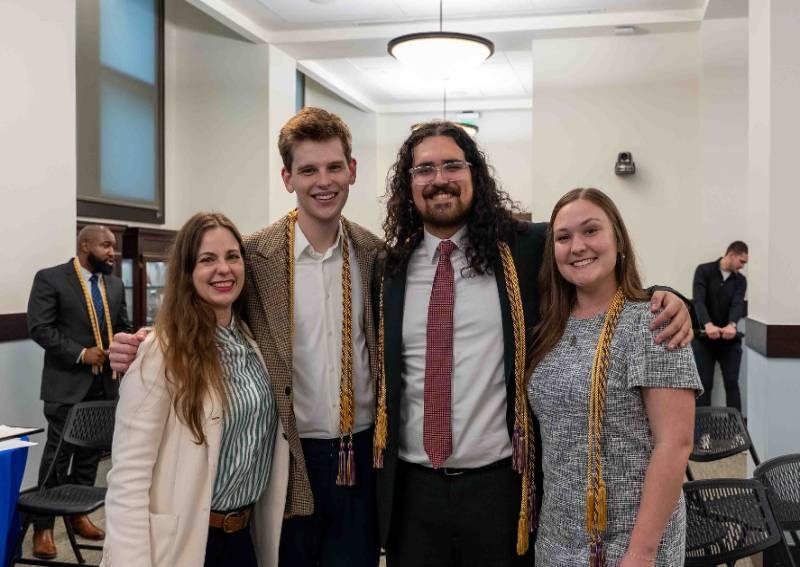
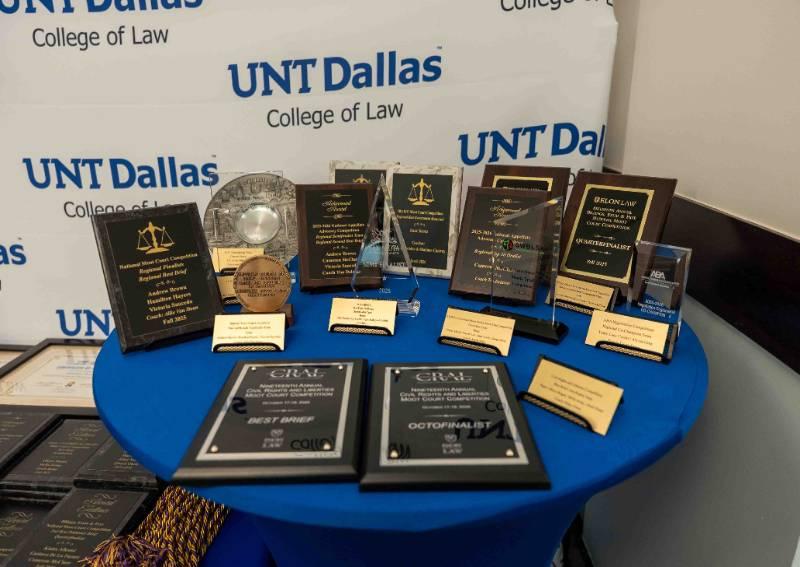
The recent alumni, Andrew Brown and Victoria Saucedo, joined rising 3L students Charles Keith and Isaac Torrez, along with Allie Van Stean, Professor Practice and Director of Advocacy Competitions. Brown and Saucedo, with partner Hamilton Hayers, made headlines earlier this year when they beat Harvard and other well-known law schools in the National Moot Court Competition, finishing third out of 191 teams. Van Stean coaches the college’s advocacy teams and is an alumna. She earned her juris doctor degree in 2018 and returned in 2023.
Under Van Stean’s leadership, UNT Dallas College of Law has risen in national advocacy team rankings and has achieved Top 25 status. Her pride and passion were clearly on display as she introduced the students and graduates to the Regents.
Embracing Advocacy
Although they come from different backgrounds and took a variety of paths to law school, all four share a love of advocacy – fighting for a client or cause – in front of a judge or jury. All have competed in mock trial or moot court competitions. For some, it was intentional. For others, it was unplanned.

“I wanted to be in the courtroom,” said Brown.
“I wasn’t interested in advocacy at first,” said Torrez, who has a finance background and originally planned for a career in transactional law, such as contracts and other legal agreements. But competing on the moot court team, including events in Virginia and New York, changed his mind.
“I went the mock trial route, because it's more expressive and theatrical (than moot court),” said Keith, gesturing with arms to make the point.
Video: Watch the “Spotlight on Students” Presentation to the Board of Regents at 7:00 Into Clip
Regent Dr. John Scott Jr. asked the group what advocacy means to them. Each provided candid and powerful answers. “To me advocacy means helping others achieve a goal. Helping your client and being a zealous advocate for them,” said Saucedo.
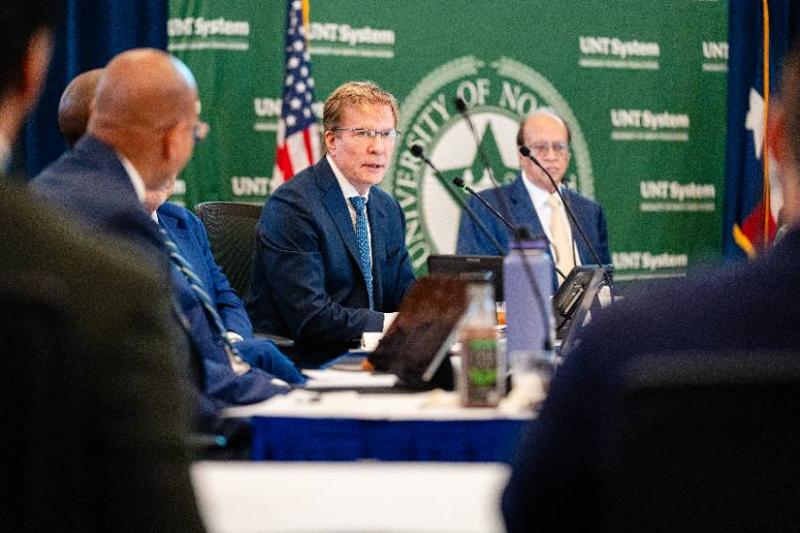
“Being an advocate means you’re going to champion your client. You have to wield the law to help this person who can’t help themselves,” said Brown.
“To me, advocacy is helping those who can’t help themselves. We have an obligation to help people that don’t have the same know-how and knowledge,” said Keith.
“For me it was always standing up for those who need representation. Having that expertise and helping the ones who need it most,” said Torrez.
The "Football of Law School"
Van Stean explained that all UNT Dallas law students are required participate in a form of persuasive oral advocacy. It can be in a class, an intramural contest or an external competition. “For a lot of students, that instills a fear of them,” she said. Others don’t fear it, they favor it. “Advocacy is the ‘football of law school’ if football teams were made up of nerds who like to argue,” Van Stean said with a smile and a chuckle.
In moot court and mock trial exercises, students simulate a case from start to finish. They learn foundational skills, preparing to become lawyers through competition “It’s a little bit addicting, to be honest,” she revealed.
Brown confirmed it. “I realized this is pretty addicting, You get in the zone,” he said. “I realized I wanted to keep going.”
Torrez will participate in the national moot court competition later this year. “I’m really looking forward to it,” he said. “It’s all I’ve been thinking about.”
Reasons and Rewards
Beyond advocacy, the four recited other reasons they chose UNT Dallas College of Law – and why their experiences have been so fulfilling.
“I like the focus on experiential education, learning by doing,” said Keith, referring to the school’s hands-on approach and focus on career-readiness. “I have a military background and this school likes the untraditional student.”
“I wanted to stay in DFW and wanted a unique experience, along with affordability,” said Saucedo. “I knew it had something special to offer, this emphasis on being practice-ready. UNT Dallas does a better job, as far as the professors and the quality of the school overall.”
“When I got to UNT Dallas, I found myself surrounded by faculty who really cared about me and my future,” said Brown. “I wasn’t just a number.”
For Torrez, the decision was more personal. The law school resonated with him for other reasons. “Really what pulled me, drew me to UNT Dallas College of Law is that my mom is an alumni. She was a part of the first accredited class,” Torrez said. “I wanted to choose a law school that believes in non-traditional students and pushes students to do their best and believes in people. Since I’ve been here, it’s been nothing but that.”
Replying to another Regent's question, Dean Felecia Epps added that UNT Dallas College of Law graduates' passing rate on the Texas State Bar Exam is more than 80%, with a goal of climbing even higher.
"Words Are My Punches Now": Law Student Moves from Boxing Ring to Courtroom
UNT Dallas President Warren von Eschenbach emphasized to Regents that the College of Law recently received “full and final accreditation from ABA" (American Bar Association), which reaffirms the accreditation first received in 2022.
Career Connections
In a field known for cut-throat competition, the current and former students agree that UNT Dallas College of Law gives them an advantage, in part through exposure to DFW legal leaders before they graduate. Brown told Regents that he met the managing partner of the law firm where he’ll soon be working. “I was afforded a job opportunity because of the advocacy program,” he explained.
Saucedo, who served as co-counsel with Brown in advocacy competitions, agreed. “This program has the ability to change career trajectories and that was the case for me,” Saucedo said.
Categories: