2025 Biology Graduate Aims to Help Solve America's Mental Health Crisis

January 07, 2026
America is struggling with a mental health crisis – and UNT Dallas alumna Isabelle Chung wants to help solve it. She thrives by helping people. That’s her calling. “I have a passion for caring for people, Chung said.
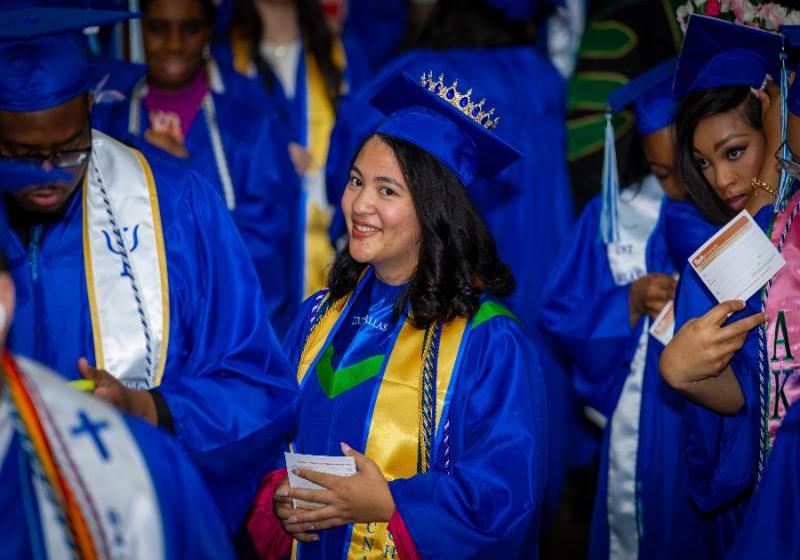
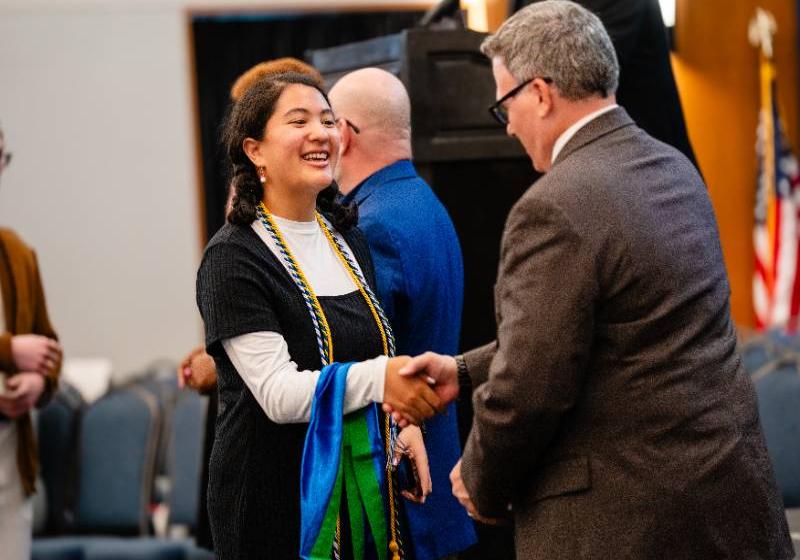
The Fall 2025 graduate, who earned a bachelor of science degree in biology, is on track to become a psychiatrist. She received her diploma during Commencement ceremonies on Dec. 15, 2025, at the Texas Trust CU Theater in Grand Prairie, TX. “I came here with lots of dreams,” she said. “And achieved what I wanted to achieve.”
Chung’s next challenge: studying for the MCAT (Medical College Admission Test) and applying to medical schools, including UNT Health Fort Worth. In the meantime, she is working as a scribe at local clinic. “I love listening to people. And I love to talk, too,” Chung said. “By hearing their experiences, you can better your own life.”
Becoming a doctor is difficult. But Chung is ready for the road ahead. She studied hard and excelled at UNT Dallas – graduating summa cum laude with a 3.9 GPA – and knows there’s a lot more work ahead. For her, it’s well worth the time and effort.
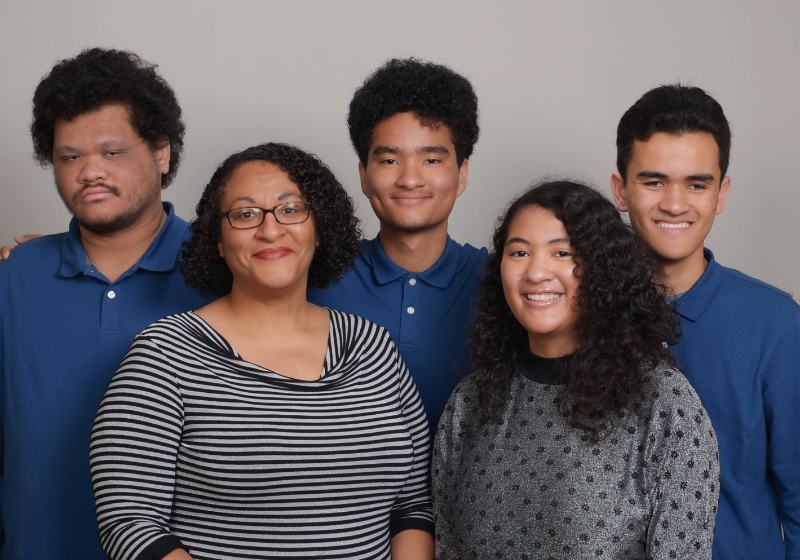
“Mental health always interested me. It was the first ‘click’ I had as a kid,” Chung explained. “I realized there’s a lot more to this” than she knew at a young age. Chung learned about manic conditions from her mother, a psychologist. “I wondered ‘how do you control this, regulate this?’,” she recalled. And Chung was influenced by what she witnessed during the pandemic. “I would see people drinking a lot. The news talked about depression and anxiety.”
One of the key components to Chung’s success at UNT Dallas was the Ronald E. McNair Scholars Program, named after an astronaut who died in the space shuttle Challenger explosion in 1986. The McNair Program assists undergraduate students who are interested in obtaining a doctoral degree through their involvement in research and other scholarly activities. Being accepted into McNair boosted Chung’s confidence and taught her an important lesson. “As long as I show up with determination, I can do anything,” she said ambitiously.
Just a few years ago, Chung would never have imagined herself graduating from college in Texas. Her family moved to Garland from Wisconsin in 2021 when her father got a new job in the Dallas area. She had never been to Texas before. It was culture shock – coming from a small midwestern city to one of the fastest-growing regions in the U.S., soon to pass Chicago as the third largest metropolitan area. At least, there’s less snow here.
Chung found out about UNT Dallas almost by accident, after first considering another North Texas institution. “I was in a gap year program serving Dallas ISD students and explored UNT Dallas,” she recalled. “It was more convenient and had resources for pre-med students.”
When Chung discovered UNT Dallas, she felt like she found a new home – a place where she fit in. The campus was welcoming and nurturing. She joined lots of organizations, including the Pre-Health Professionals Club and TriBeta, the biology honors society. Chung volunteered for thousands of hours at two nonprofits, City Year Dallas and Texas Health Dallas. She also tutored peers and advised classmates.
To pay help pay the bills, Chung worked at the campus Starbucks and as a Trailblazer Ambassador, also known as a Blue Blazer Tour Guide, helping students take full advantage of all of our resources. She even conducted a video tour of the university that’s on YouTube for everyone, especially prospective students, to see.
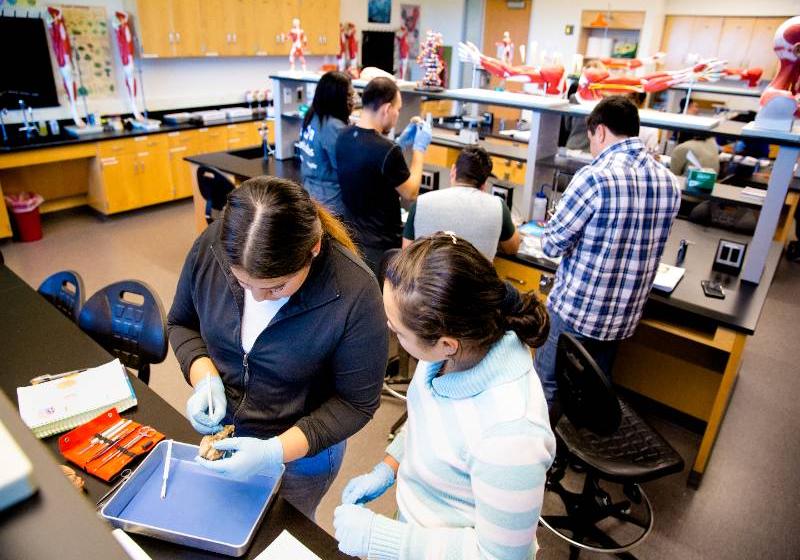
Professors took a personal interest in Chung’s progress, especially Dr. Aubrey Frantz, an assistant professor of biology in the Department of Natural Sciences at the School of Liberal Arts and Sciences. Dr. Frantz served as a faculty advisor and mentor for a collaborative research project with Chung. “I did research into things I never knew existed,” Chung said.
VIDEO: Watch Dr. Aubrey Frantz Reveal Her Passion for Science Education in This ‘Why I Teach’ Series
They delved into bacteriophages, the active ingredient used in common household disinfectant products. Bacteriophages are actually viruses – good viruses – that safely and specifically target bacteria to improve cleanliness and sanitation. However, they’re only active for a short time, making it possible for cleaned surfaces to become contaminated again. “By participating in this project, I was taught that context is everything and you can never have too much information,” Chung said.
Chung poured through multiple previous studies of bacteriophages, reviewing reams of material, numerous data and drawing new, updated conclusions. Research shows bacteria are becoming more resistant to these antimicrobial and antibiotic disinfectant products, posing a potential public health risk. “Because of our research persistence, we were able to being awareness to and combat global challenges such as antimicrobial resistance, understand how biological tools can complement traditional strategies and prove how undergraduates can be part of solutions to universal health challenges,” Chung recently said at a campus event where she spoke about her experiences at UNT Dallas (more details ahead).
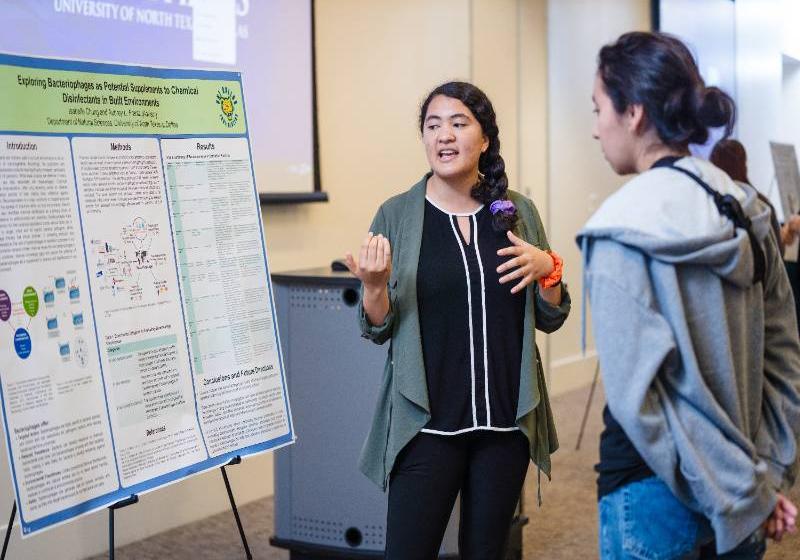
In early 2024, Chung had the opportunity to present their research project at the annual Texas Tech University Research Conference (TTURC) and the UNT Dallas Student Research Symposium. It was the culmination of hands-on, experiential learning that is a top priority for UNT Dallas and our students, regardless of their major – all part of the university’s expanding Classroom-to-Career initiative, which includes Student Success Coaches.
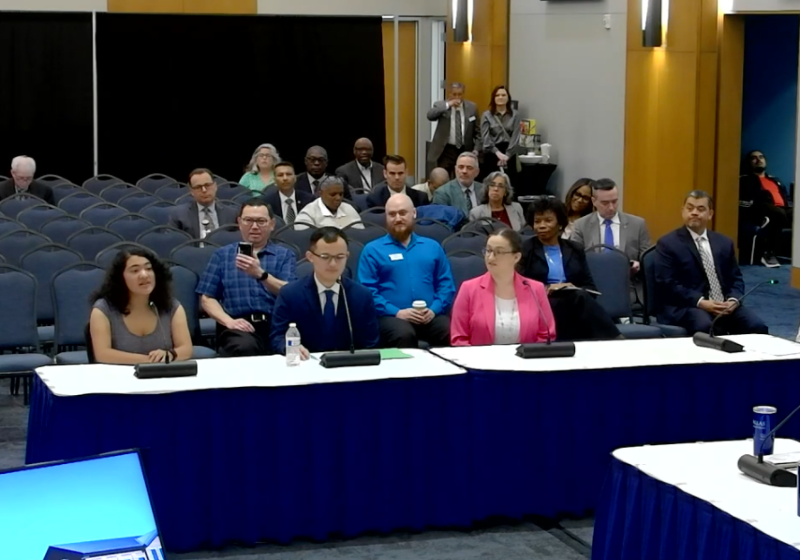
Later, Chung was chosen to speak about her research to the UNT System Board of Regents when they met on campus. Her remarks were part of the “Student Spotlight” held at each Board of Regents quarterly meeting. “It is so fun to hear about the research,” said Dr. Michael Williams, UNT System Chancellor. “You’re educating me, which is a great thing.”
VIDEO: Watch Chung’s Entire Message to the Board of Regents at 10:25 in This Clip
Well before participating in the research project, Chung’s initial experience at UNT Dallas was so positive, she convinced her brother Myles to enroll, too. At first, he refused. But after some coaxing and a campus tour, his mind was made up. Myles felt the same sense of belonging that Isabelle did.
“Eventually he caved in,” Chung said with a laugh. “Two weeks later, he loved it. We knew the truth” (that her advice was spot on). That friendly sibling rivalry was on display as Isabelle focused on biology and Myles on chemistry. She loves chemistry, too, but majored in biology because it relates more closely to her planned profession. “100% there’s a rivalry between chem and bio students,” Chung explained. “Faculty, too.”
Rivalries were set aside shortly before Chung graduated, as the entire Natural Sciences Department and School of Liberal Arts and Sciences came together to celebrate a milestone. On December 2, 2025, university leaders, elected officials and healthcare industry professionals gathered at a ribbon-cutting for the new UNT Dallas STEM Building.
“It is here to create more opportunities for undergraduate research and … to train future doctors, nurses, researchers and health leaders, and give students hands-on experience,” Chung told the audience. “This building ensures that UNT Dallas students, especially those from communities historically underrepresented in STEM and medicine, have access to state-of-the-art labs, faculty mentorship and research opportunities.”
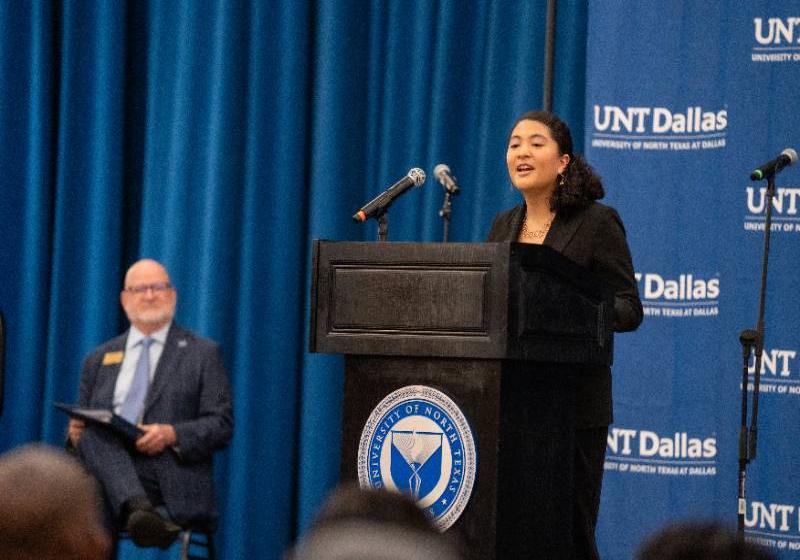
Chung was the only student among the event’s speakers – a special honor at a special moment. It was yet another example of her leadership on the campus where those leadership skills blossomed. Although she won’t take classes or use the labs in the new STEM Building, Chung has already benefited tremendously from the trailblazing spirit and culture of innovation that brought the facility to life.
For her own life, in addition to practicing psychiatry, Chung’s goal is to become a medical director or administrative leader in a private clinic or a hospital in collaboration with a university. It all connects to her inner desire to make life better for others. “I want to help people find solutions and treatments, sometimes for problems they don’t even realize,” she said. “And you can’t always fix them in a day.” For Chung, that represents both a challenge and an opportunity destined to remain for much, if not all, of her career. What more could a true Trailblazer want?
Categories: